
Salt Air and Air Conditioners
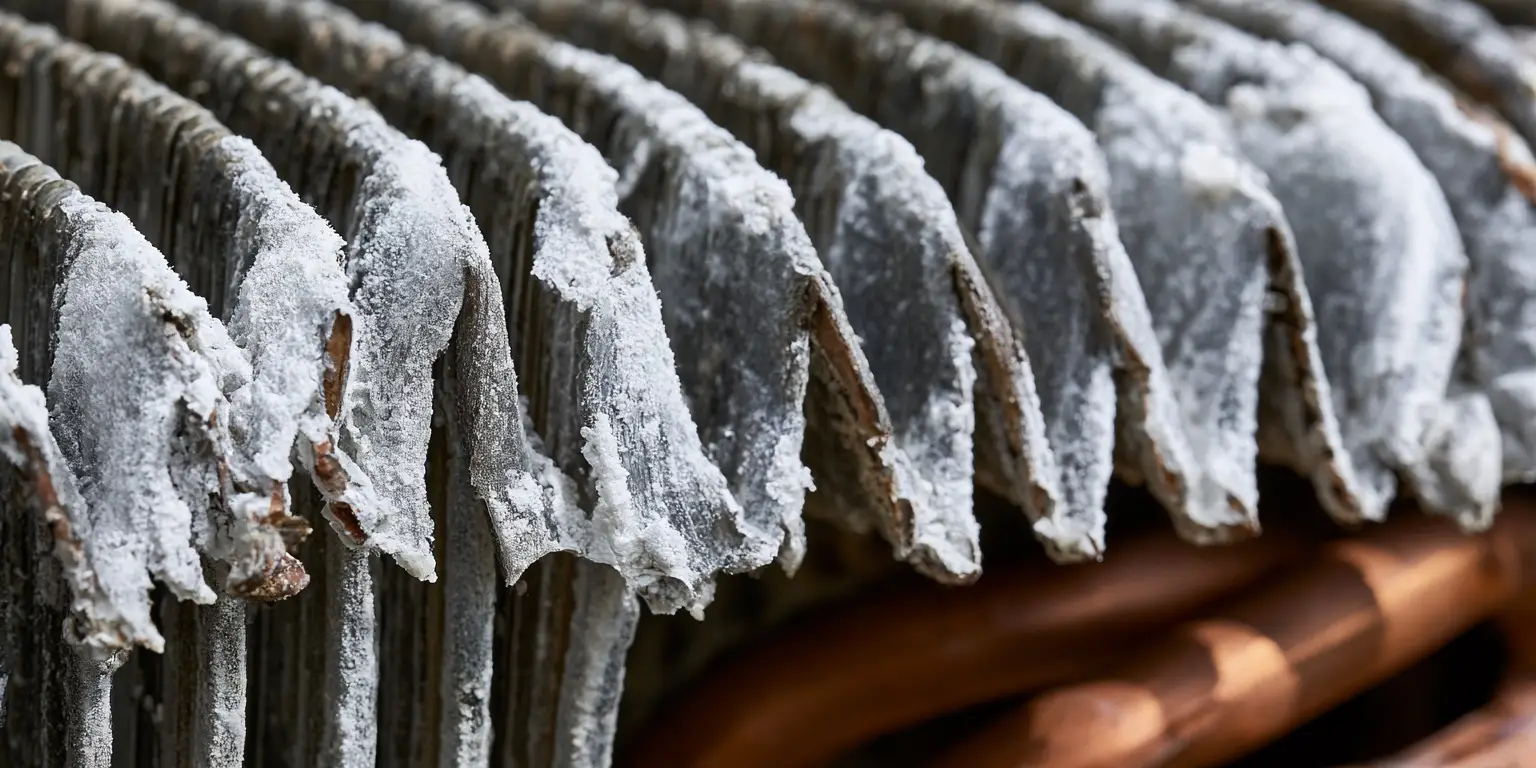
A corroded coil stops transferring heat long before the unit stops running.
The failure you cannot hear
Salt damage does not announce itself. The unit keeps running, the fan keeps turning, and nothing rattles or drips. What happens instead is that the machine quietly gets worse at its job, and the power bill absorbs the difference for years before anyone connects the two.
The mechanism is straightforward. A condenser coil is copper tube pressed through thin aluminium fins. Those two metals sitting in contact, wetted by salt laden air, form a galvanic couple, and the aluminium is the one that gives up. The fins corrode, go powdery, and lose their mechanical grip on the tube. Heat transfer depends entirely on that fin to tube contact, so once it degrades the compressor has to run at higher head pressure to reject the same heat. It draws more power, runs hotter, and its working life shortens. The unit is still cooling. It is just paying more to do it.
What coil coatings do and do not do
Blue fin and gold fin are hydrophilic and anti corrosion treatments applied to the aluminium at the factory, and the better ones are genuinely worth having near the water. They slow the onset of the corrosion described above and help condensate sheet off the fin rather than sit on it.
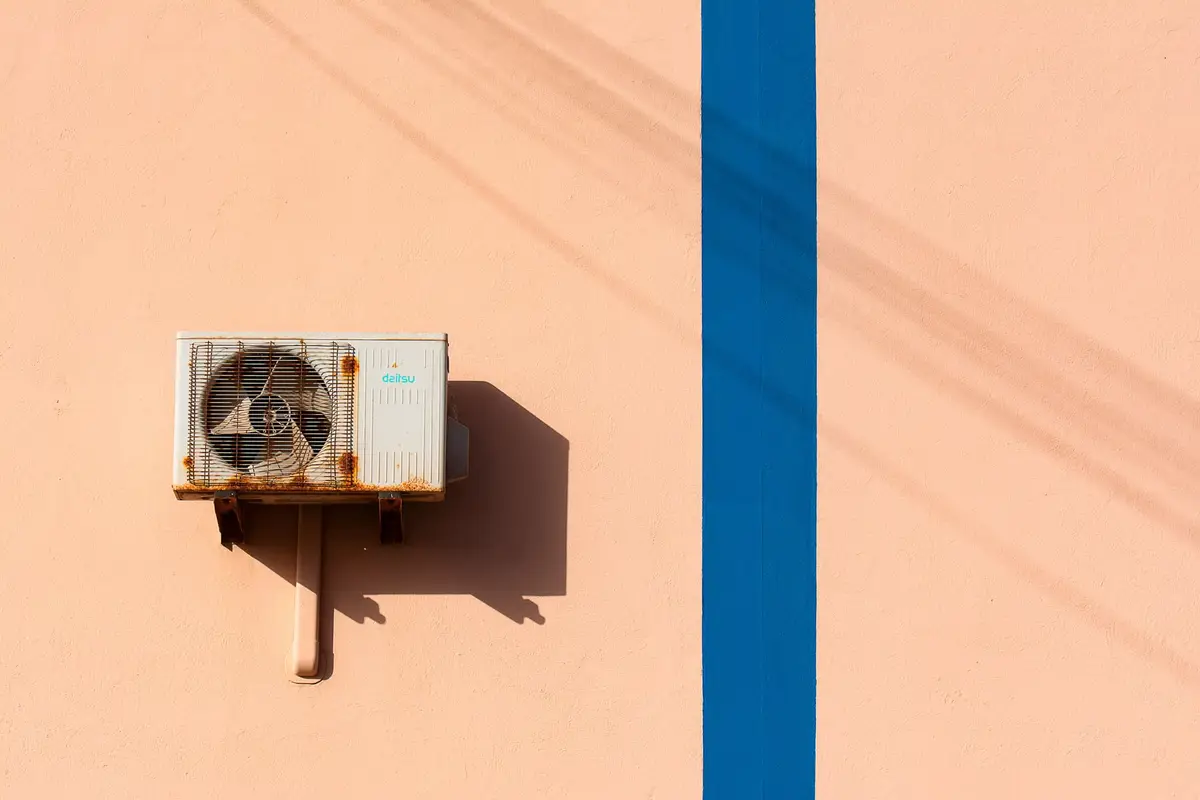
What they do not do is protect the rest of the machine. The chassis, the fan motor mounts, the guard, the screws, the electrical enclosure and the brackets are all steel or steel fastened, and salt takes those too. On a unit within sight of the water it is common to find a coil in reasonable order sitting in a casing that is rusting through at the base pan. Full factory marine grade treatment covers more than the coil, and if you are close to the beach it is a conversation worth having about the specific model rather than assuming the coating on the box is enough.
| Distance from the water | What we would specify |
|---|---|
| Beachfront, first row, salt spray reaches the building | Full marine grade treatment on the whole unit, not just the coil, and a sheltered aspect is close to mandatory |
| Within a few hundred metres | Treated coil at minimum, sheltered siting, stainless or treated brackets, rinse it regularly |
| One to five kilometres | Treated coil is worth the money, siting still matters on an exposed south east wall |
| Well inland, Redlynch, Edmonton, the valley | Standard coil is fine, siting driven by airflow and noise instead |
Siting matters as much as specification
Where the outdoor unit goes is a free decision at quote stage and an expensive one afterwards.
The prevailing wind here is south easterly for much of the year, carrying salt inland off the water. A condenser sitting on an exposed south east wall in Trinity Beach or Machans Beach is getting the worst of that continuously. The same unit on the opposite side of the same house, or behind a screen wall or a garage, has a materially easier life. It still needs clear airflow, so tucking it into a sealed enclosure is not the answer, but there is almost always a sheltered aspect that also breathes.
The other free measure is fresh water. Hosing the condenser fins down gently every few months rinses off accumulated salt before it can do its work. Doing that well takes about five minutes:
- Turn the system off at the isolator, not just at the remote
- Use a garden hose on a gentle spray, never a pressure washer, because fins bend and bent fins block the airflow you are trying to protect
- Rinse down through the fins in the direction they run, from the top
- Rinse the base pan, the guard and the bracket while you are there, since those are steel and they go before the coil does
- Let it drain and dry before switching back on
- Do it every few months, and after any period of strong onshore wind
Realistic expectations near the water
A well specified, well sited unit a few kilometres from the beach should last a long time. The same unit facing the water on an exposed wall, never rinsed, will not. That is not a brand problem and no warranty covers it, since coastal corrosion is commonly excluded or limited.
We specify the coating and the condenser position together when we quote split system installation in Cairns. If you are near the water and want an honest read on an existing unit, call 0489 266 523.
-
What Size Air Conditioner Do I Need
Why oversizing is the most common and most expensive sizing mistake in the tropics.
-
Cyclone Rated Air Conditioner Installation
A bracket is only ever as strong as whatever it is bolted into.
-
Split System vs Ducted Air Conditioning
Not a budget ladder. Two different ways of moving conditioned air through a house.
Ask for a price
You get a straight answer about what the job needs, including when it does not need us.
- Hours
- Weekdays 7 until 5, Saturday mornings
- Area
- Cairns, the beaches, and south to the Cassowary Coast
- Quotes
- In writing, itemised, no obligation
- We ask what the rooms are doing before we quote a size, not after.
- The quote covers the mount, the line set, the electrical and the make good, so there are no line items appearing on install day.
- Written, itemised, and yours to compare against anyone else's.