
Cyclone Rated Air Conditioner Installation
A bracket is only ever as strong as whatever it is bolted into.
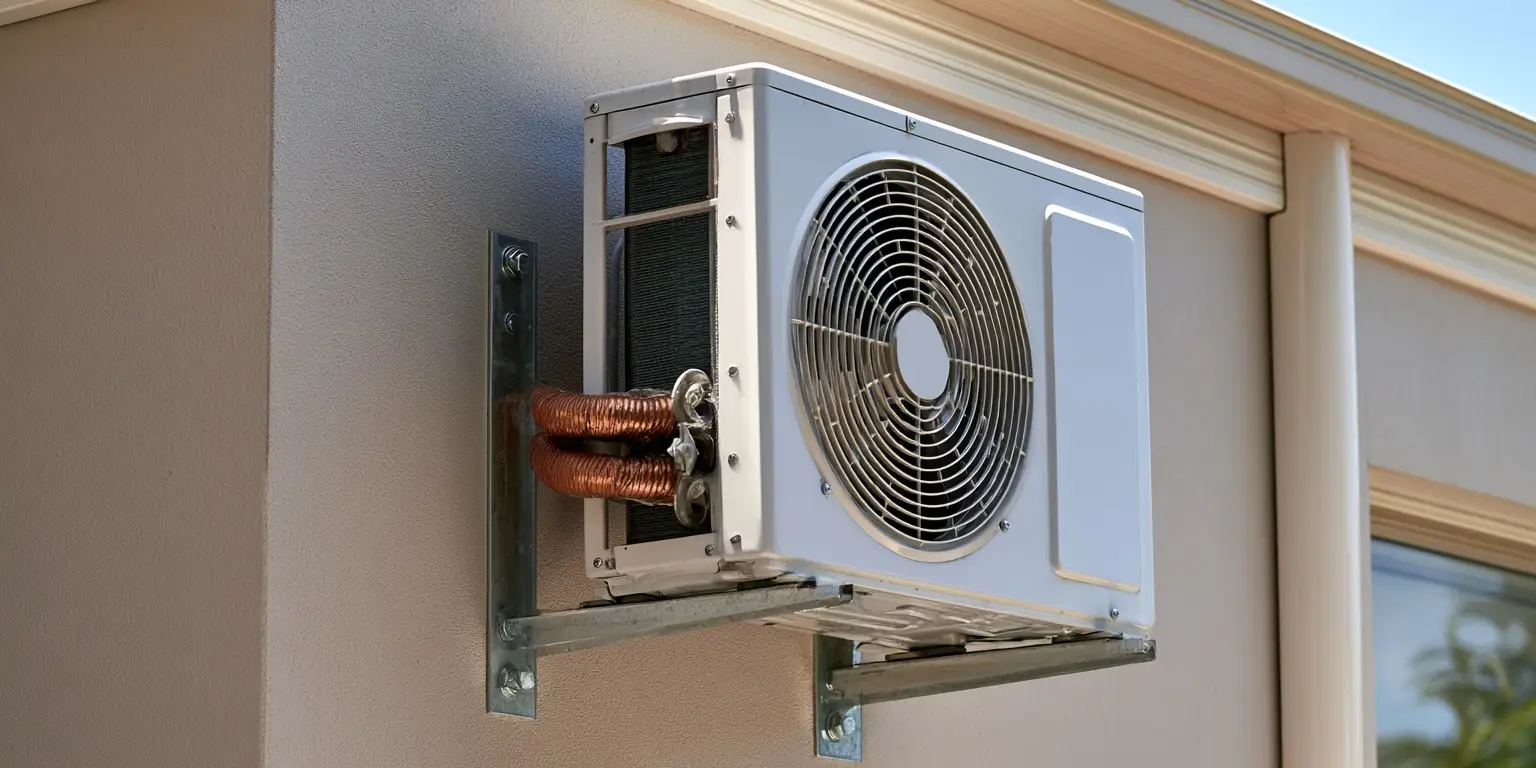
The part of the job nobody sees again
An outdoor unit is a flat sided steel box, heavier than most people expect, hanging off the side of a house in a part of the country that gets cyclones. Everything about how it is attached to the building matters, and none of it is visible once the installer has packed up. That combination is precisely why it is the part of an installation that gets rushed.
Coastal Far North Queensland sits in wind Region C under the loading standard, one of the cyclonic regions. Design wind speeds here are well above what applies in Brisbane or Sydney, and the standard treats cyclonic regions differently in another way that matters more than the headline speed: it accounts for repeated load cycles, because a cyclone works a building back and forth for hours rather than hitting it once.
For a condenser on a wall that means the fixings do not only get pushed. As the wind swings round the unit gets pressure on one face and suction on the other, so the anchors are in tension as often as they are in shear, and the load reverses over and over. That is how a fixing which would happily hold a steady pull works itself loose.
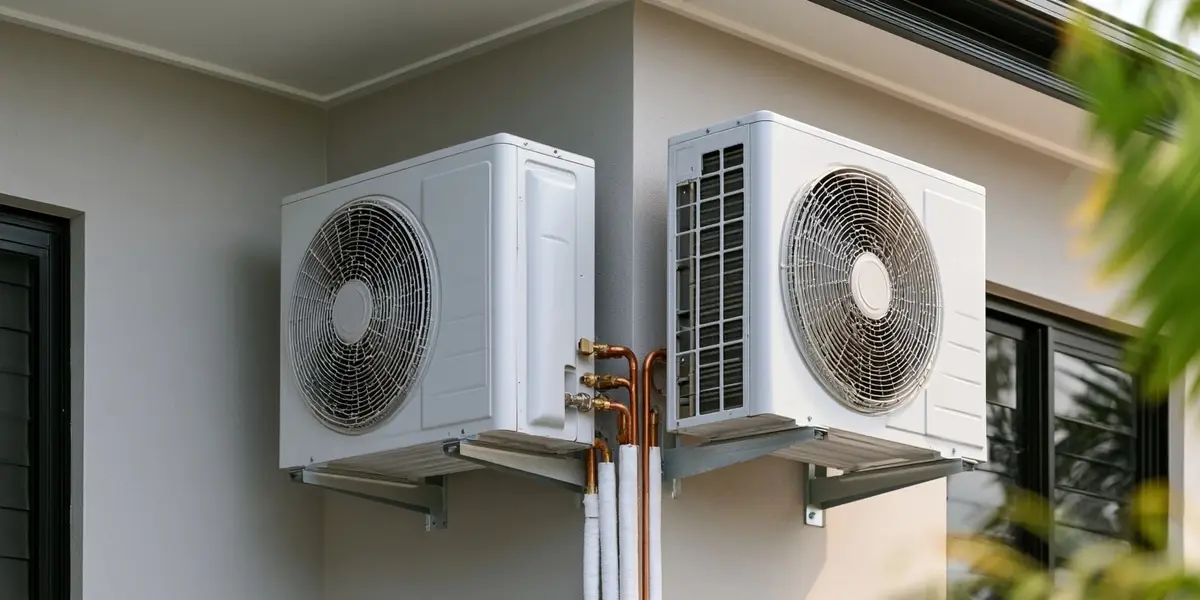
The bracket is only as good as what it goes into
Most brackets have a manufacturer’s rated capacity. That rating assumes the bracket is fixed to something capable of accepting the load. In practice, that assumption is where installations fail.
| What the bracket is fixed into | Holds a Region C load |
|---|---|
| Timber stud, hit deliberately, correct fastener and depth | Yes |
| Bond beam or filled core in blockwork, rated masonry anchor | Yes |
| Slab edge or concrete, rated masonry anchor | Yes |
| Cladding only, stud missed | No |
| 4.5mm fibre cement sheet | No |
| Plastic plugs in unreinforced blockwork | No |
| Rubber feet on the ground, nothing bolted | No |
| Plinth with the unit bolted or strapped down | Yes |
Screws into 4.5mm fibre cement sheet, a single fixing through cladding that misses the stud behind it, or plastic plugs into unreinforced blockwork give almost no pull out resistance no matter what the bracket is rated for. The fixing has to reach real structure: a stud, a bond beam, a slab edge, or a properly specified masonry anchor in sound material. On an older high set timber home there is usually good hardwood framing behind the cladding, but it has to be located and hit deliberately rather than hoped for.
Ground mounting removes the wall problem and introduces its own. A unit sitting on rubber feet is not restrained by anything except its own weight. It needs to be bolted or strapped to a plinth, and that plinth wants to be high enough to keep the base above the sheet water that moves across the ground here in a serious downpour.
What a compliant install looks like
Fixings that reach structure and suit the material they are going into. Corrosion resistant fasteners, because salt attacks the anchors as readily as it attacks the coil. A bracket or stand rated for the mass of the unit with wind load applied, not just for the mass. Enough clearance around the condenser that it can still breathe.
Worth stating plainly as well: an unrestrained outdoor unit in a cyclone becomes a projectile, and that is a risk to the house next door as much as to yours. Insurers have been known to take an interest in whether an installation was done properly when a claim follows.
What to ask whoever quotes
Four questions, and anyone who installs in this region should answer all of them without pausing:
- What is the bracket or stand rated for, with wind load applied rather than just the mass of the unit?
- What will the fixings actually go into, and how will you confirm you have hit it rather than assumed it?
- What is the plan where the wall turns out not to be structural?
- What grade are the fasteners, given salt takes anchors as readily as coils?
If the answer amounts to a bracket being a bracket, keep looking.
We detail the mounting method in writing before the job starts, as part of split system installation. Call 0489 266 523 if you want an existing install looked at.
-
What Size Air Conditioner Do I Need
Why oversizing is the most common and most expensive sizing mistake in the tropics.
-
Salt Air and Air Conditioners
A corroded coil stops transferring heat long before the unit stops running.
-
Split System vs Ducted Air Conditioning
Not a budget ladder. Two different ways of moving conditioned air through a house.
Ask for a price
You get a straight answer about what the job needs, including when it does not need us.
- Hours
- Weekdays 7 until 5, Saturday mornings
- Area
- Cairns, the beaches, and south to the Cassowary Coast
- Quotes
- In writing, itemised, no obligation
- We ask what the rooms are doing before we quote a size, not after.
- The quote covers the mount, the line set, the electrical and the make good, so there are no line items appearing on install day.
- Written, itemised, and yours to compare against anyone else's.